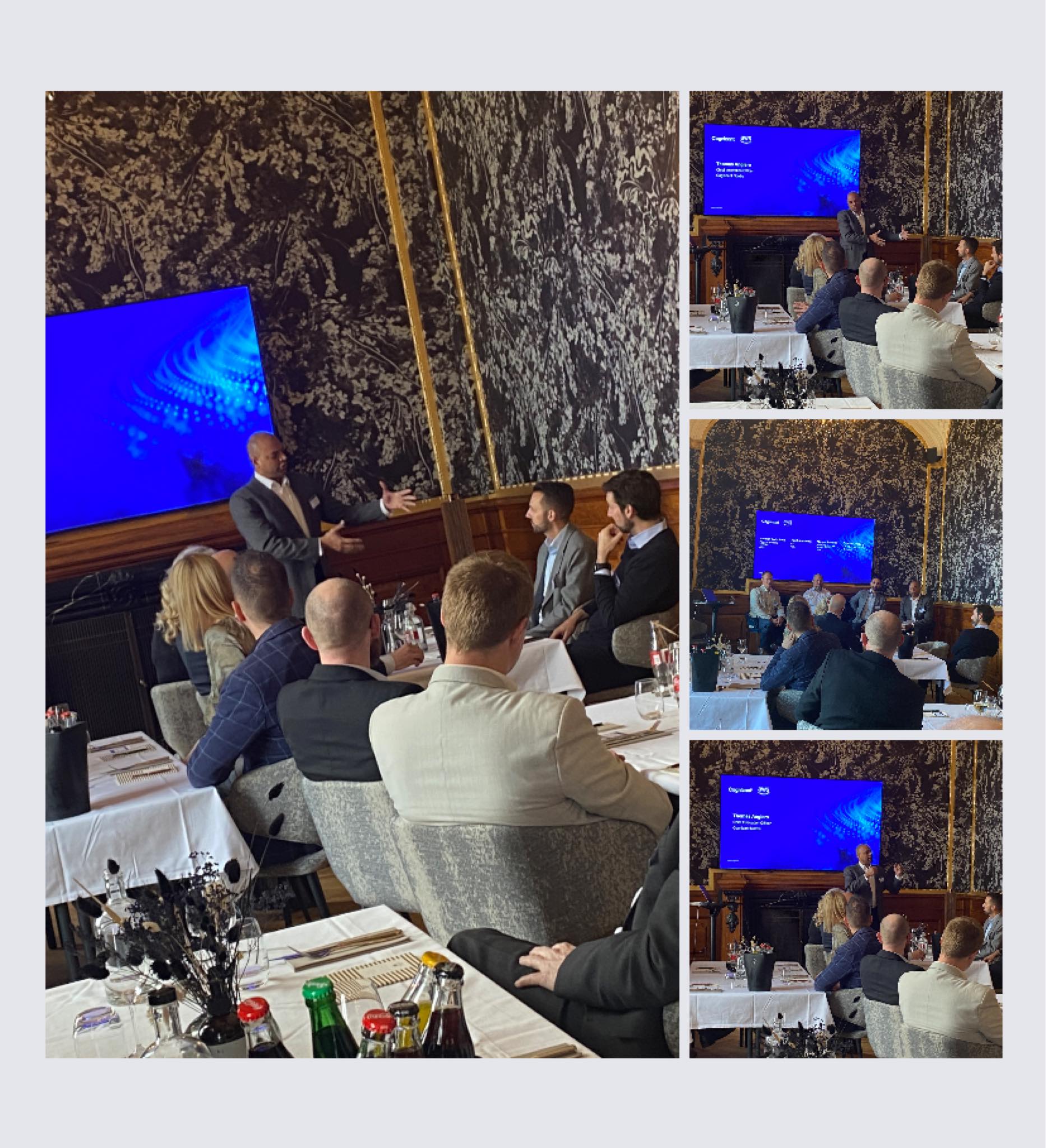
Modern boards need at least one innovation director: a member who understands how AI and emerging technologies change business models, customer expectations and competitive dynamics. Traditional expertise in finance, regulation and operations remains valuable, but it cannot identify disruption before it arrives. This series explains what an innovation director does, how to recruit one, and what the role returns.
The Great Disconnect
Your board meetings still focus on quarterly earnings while AI reshapes entire industries overnight. Your directors debate incremental improvements while startups powered by blockchain and robotics prepare to eliminate your business model entirely. This disconnect between traditional board expertise and technological reality isn’t just risky—it’s existential.
The pace of change has fundamentally shifted. What took decades now happens in months. Technologies that seemed like science fiction two years ago are now being deployed by your competitors. Yet most boards need to still operate with the same composition they had in 2010: finance experts, former CEOs from traditional industries, and regulatory specialists who excel at managing the past but cannot navigate the future.
In this series:
This article is part of the Speaker Selection Guide, a comprehensive resource for event managers selecting and booking professional keynote speakers.
The Innovation Director: A New Board Essential
Modern boards need members who understand not just what technology can do, but how it fundamentally changes business models, customer expectations, and competitive dynamics. These innovation directors bring three critical capabilities:
Strategic Foresight – They see disruption before it arrives, understanding how AI, robotics, blockchain, and other emerging technologies will reshape industries in the next 2-5 years.
Cultural Transformation Expertise – They know that technology adoption fails without mindset change, and they can guide the boards needs through the psychological shifts required for genuine innovation.
Bridge Building – They translate between the traditional business world and the digital future, helping established leaders understand and embrace necessary changes.
Why Traditional Expertise Isn’t Enough
Your current board members built their careers in a different era. Their success came from optimizing existing models, managing risk through precedent, and competing within established rules. But AI doesn’t follow those rules. Cryptocurrency doesn’t respect traditional financial boundaries. Robots don’t care about your organizational chart.
The expertise that made your directors successful—deep industry knowledge, regulatory mastery, financial optimization—remains valuable. But without innovation leadership at the board level, that expertise becomes a liability, anchoring your company to outdated assumptions while nimble competitors race ahead.
The Transformation Opportunity
Companies that add innovation directors to their boards don’t just survive disruption—they lead it. These directors challenge comfortable assumptions, introduce new strategic options, and most importantly, transform board culture from risk management to opportunity creation.
This isn’t about adding a “tech person” who speaks in jargon. It’s about bringing in a strategic leader who understands both worlds: where business has been and where it’s going. Someone who can honor your company’s legacy while architecting its future.
Board recruiters and search firms: I bring proven governance experience (6 boards) + enterprise revenue credibility (€500M+ closed) + genuine multi-year commitment (average tenure 4.0 years). Available for serious conversations about board opportunities.
Thomas Anglero is a Strategic AI Advisor, keynote speaker and author of Intro to Artificial Intelligence. He has delivered over 450 keynotes across 30 countries for organisations including IBM, the WHO, the World Government Summit and the European Commission. He founded the IBM Watson AI Lab for Cancer at the Oslo Cancer Cluster and closed over $500 million in enterprise transformation deals as CTO and Chief Innovation Officer at Cognizant.