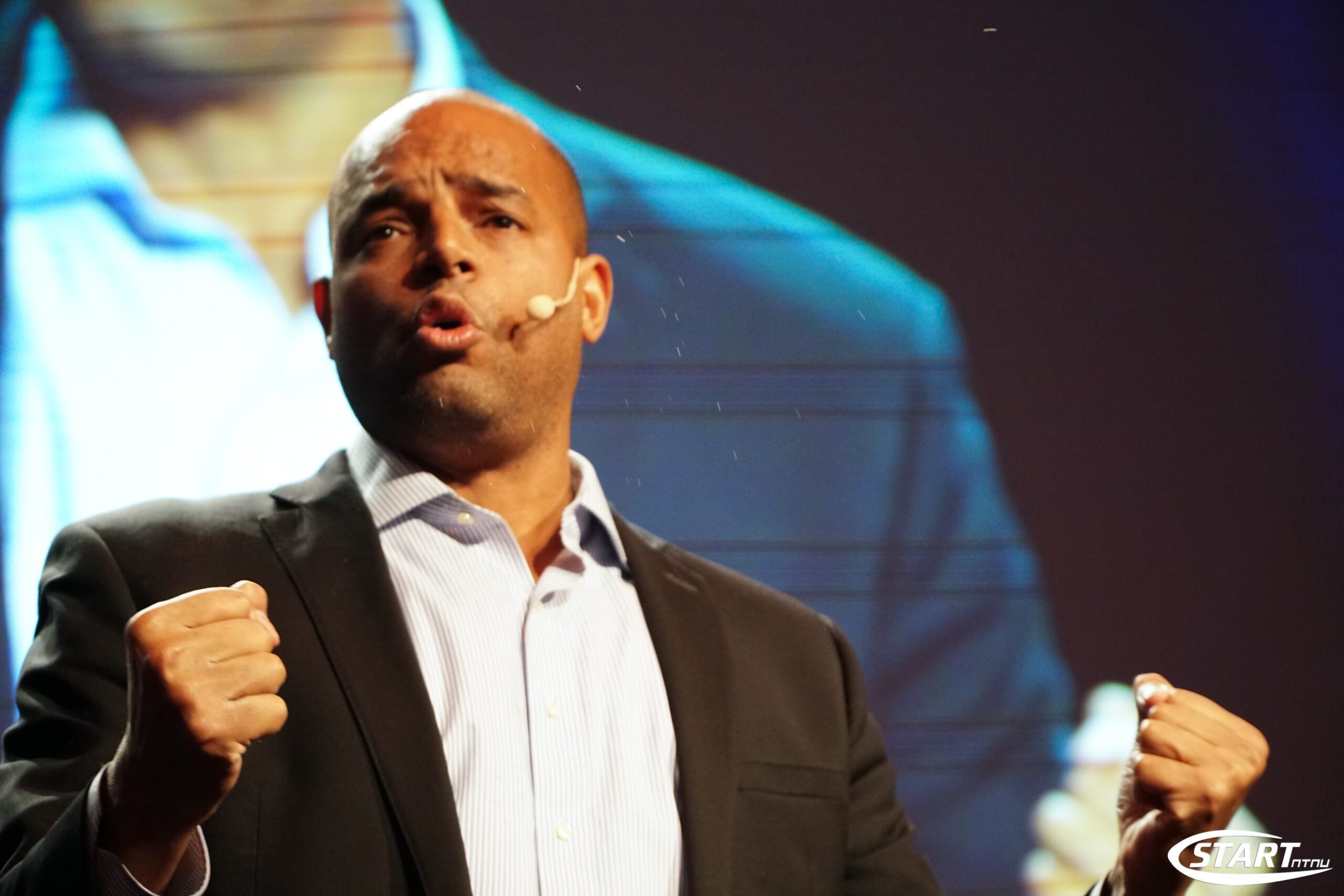
Eyes, ears, mind, soul: what a keynote fee actually buys
The difference between a fifteen thousand dollar AI speaker and a fifty thousand dollar one is how deeply they move the audience. The expensive speaker takes the room through four stages, eyes, then ears, then mind, then soul, until the trust forms and people decide to act. That progression, not the slide deck, is what the fee buys.
The four stages
First you touch their eyes, and they think you are worth watching. Then their ears, and they think you are worth listening to. Then their mind, and they begin to reflect on what you said. And then, if you are good enough, you reach the soul, and that is the moment they decide they trust you. Whatever you say next, they will act on. Most speakers stop at the eyes and the ears. The ones worth the higher fee reach the soul.
Why I make a room uncomfortable before I make them laugh
When I use humour on stage, it is usually to break a silence I created on purpose. I let a room sit in the weight of where they have fallen short, the project they did not fund, the decision they avoided, and I let it sit longer than is comfortable. Then I break it with a joke, so they can breathe, and then I build them back up. That is not cruelty. It is care. You cannot lift people who have not first felt the ground.
The proof is what they do afterwards
I have had people come up to me and say that after a keynote they left their company, moved country, started again, and their life is better for it. That happens because we went through those four stages together in the room. That is what the audience remembers, long after the slides are forgotten, and it is what a real fee reflects.
What this means when you compare fees
If you are weighing one speaker’s fee against another’s, you are not really comparing presentations. You are comparing how far into the room each one can reach. The cheaper speaker may inform. The one worth more will move people to change something on Monday morning. That choice is yours to make.
You can judge the reach for yourself. Watch a keynote.
Questions this article answers
- What is the difference between a cheap and an expensive keynote speaker?
- What does a high keynote fee actually pay for?
- How does a great speaker build trust with an audience?
Thomas Anglero is a Strategic AI Advisor, keynote speaker and author of Intro to Artificial Intelligence. He has delivered over 450 keynotes across 30 countries for organisations including IBM, the WHO, the World Government Summit and the European Commission. He founded the IBM Watson AI Lab for Cancer at the Oslo Cancer Cluster and closed over $500 million in enterprise transformation deals as CTO and Chief Innovation Officer at Cognizant.