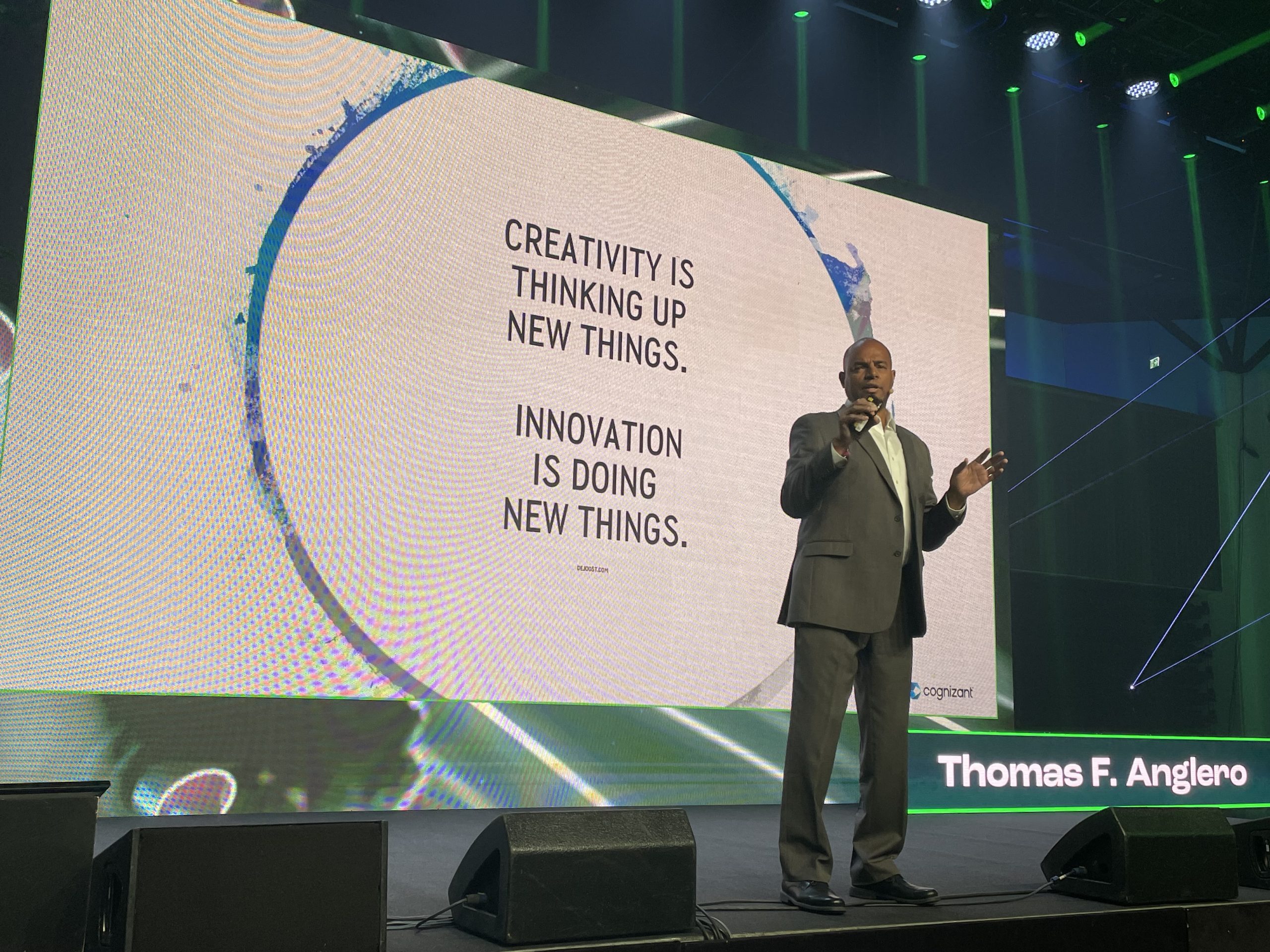
Advice to start AI with mundane tasks and lowered KPIs sets leaders up to fail quietly. Automating the known is maintenance with better tooling, not transformation. The purpose of AI at executive level is to surface what you have missed entirely: new revenue models, new market positions, and the structural weaknesses nobody is incentivised to find.
If the last article you read about AI told you to start with mundane tasks and redefine your KPIs downward, you are being set up to fail. Quietly. Politely. With dashboards that prove you achieved exactly what you aimed for — which was nothing worth achieving.
A recent piece in Fortune offered this guidance to leaders: focus on automating mundane tasks for immediate productivity gains, then redefine your success metrics as AI changes how value is created.
On the surface, it sounds reasonable. That is what makes it dangerous.
Focusing on mundane tasks means spending your AI budget on things you already understand. You are automating the known. You are optimising what exists. And you are calling it transformation.
It is not transformation. It is maintenance with better tooling.
The purpose of AI at the executive level is not to do what you already do, faster. It is to surface what you have missed entirely. New revenue models you have not considered. Market positions you did not know were available. Structural weaknesses in your governance, your processes, your assumptions — the ones nobody in your organisation is incentivised to find.
That is where the value sits. And mundane task automation will never take you there.
The second piece of advice — redefine your KPIs to match what AI can deliver — is worse. It is asking you to lower the bar so you can clear it. To assign metrics that can be achieved and then declare success.
But if AI is doing what it should, your existing KPIs are the wrong KPIs. The new markets, the new models, the new processes — you have never measured them before because you have never seen them before. You cannot put a KPI around something you did not know existed until AI showed it to you.
Setting achievable KPIs around AI adoption is how leaders fail without realising they have failed. The numbers look fine. The dashboards are green. And the organisation falls further behind every quarter.
Why you need minds that challenge your assumptions
I work with a team of AI advisors — the sharpest minds I can assemble — and we examined this article from every angle. Not one of them found a single piece of advice worth following.
That is not an attack on the publication. It is a warning to you. Be careful what you read. Be careful what you believe. Because I know you are in a position where you need answers, and the wrong answers delivered with confidence are more dangerous than no answers at all.
Surround yourself with minds that challenge your assumptions, the way my AI advisors and I together challenged this article. That is how you lead through this.
If you are leading your organisation through this, I work with a small number of senior leaders each quarter. Get in touch at Anglero.com.
Thomas Anglero is a Strategic AI Advisor, keynote speaker and author of Intro to Artificial Intelligence. He has delivered over 450 keynotes across 30 countries for organisations including IBM, the WHO, the World Government Summit and the European Commission. He co-founded the IBM Watson Lab for Cancer at the Oslo Cancer Cluster and closed over $500 million in enterprise transformation deals as CTO and Chief Innovation Officer at Cognizant.