The Q&A test: why fake AI speakers avoid questions
The clearest sign that an AI speaker has never built anything with AI is that they avoid the Q&A. They finish on time, sometimes a minute over, then explain that there is no time for questions. The reason is not the clock. It is that the only thing they can deliver is a slide deck they have recited to every audience before yours, and an unscripted question would show there is nothing underneath it.
I have delivered over 450 keynotes and spent a lot of time backstage with other speakers. The pattern repeats, and once you have seen it you cannot unsee it.
They are watching the clock, not the audience
Watch what these speakers actually do on stage. They have a topic that is hot and a deck that fills thirty minutes, and they have rehearsed the timing to the second. When the material runs thin they drop in two or three videos, not to teach anything but to consume time, and you can see them relax while the clip plays because the clock is doing the work for them. They are not presenting to the audience. They are presenting to the clock. The audience’s real need never comes up, because answering it would mean leaving the script.
That is why the apology lands right at the end. There is no time for Q&A because there cannot be. A question they did not prepare for has no slide.
A millimetre of depth, a mile of delivery
Most of the speakers being paid well today have genuine presentation skills. The slides are beautiful. The jokes are timed. The quotes make people nod. But the content is a millimetre thick and the delivery is a mile wide. I once met a man in Sweden who had just been named the best keynote speaker in the country. He used the same deck for years and never changed a slide. He milked it, he made good money, and audiences loved it. He also had no depth.
A polished deck with good jokes is storytelling. It is not what a leader in trouble needs at nine in the morning before they walk into a board meeting. They do not need a cute slide deck. They need a solution, and a performer does not have one, because a performer has no experience to draw it from.
What a practitioner does instead
A speaker who has actually built with AI does not want to hand over a fixed presentation. They want to know exactly who is in the room: the company, the conference, the situation that week. The night before, they look at what has happened in the industry in the last day or two, and they open by connecting it to the people in front of them. This happened yesterday. Here is what it means for you. Here is what to reflect on, what to act on, and what to avoid.
That only works if you can speak to technology, leadership and culture at the same time. A leader who fixes the tooling and breaks the culture has not been helped. The practitioner brings a way through. The performer brings slides.
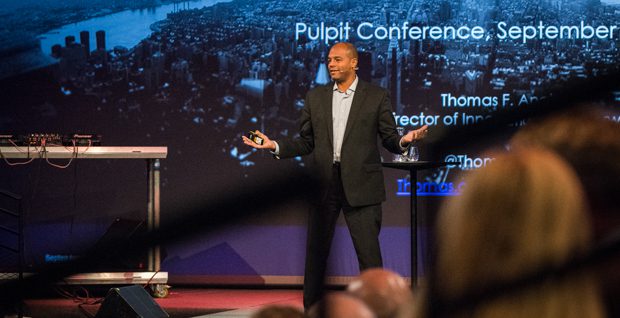
When I take a stage, I tell the room in the first minute to challenge me whenever they like, to throw the hardest question they have, the one that is actually keeping them awake at night. I mean it, and the questions come. That is only possible when there is something real behind the slides.
The test any event manager can run
You do not need to be an AI expert to find this out. Build Q&A into the format and watch the reaction. The speaker who has done the work wants the questions. They will tell the room to interrupt them, to put them on the spot, to challenge them, because they have answers and they are not protecting anything. The speaker who has only memorised a deck will guard the clock and find a reason there is no time. That single difference tells you whether you have booked an expert or an entertainer.
If you want a fuller checklist, the questions worth asking on a vetting call and the warning signs to listen for are set out in the speaker selection guide.
There is nothing wrong with an entertainer, if entertainment is what the day calls for. But if your audience is carrying real pressure about AI, and most of them are, they need someone who can stand in the Q&A with no slides behind them and still say something true.
That choice is yours to make, and your audience will remember which kind of speaker you put in front of them. If you are weighing one up for a room like that, it is worth watching how a speaker handles the unscripted moment before you decide. See what that looks like on a stage.
Questions this article answers
- How can you tell if an AI keynote speaker has real, hands-on experience with AI?
- Why do some keynote speakers refuse to take questions from the audience?
- What should an event manager look for when booking an AI speaker?
Thomas Anglero is a Strategic AI Advisor, keynote speaker and author of Intro to Artificial Intelligence. He has delivered over 450 keynotes across 30 countries for organisations including IBM, the WHO, the World Government Summit and the European Commission. He founded the IBM Watson AI Lab for Cancer at the Oslo Cancer Cluster and closed over $500 million in enterprise transformation deals as CTO and Chief Innovation Officer at Cognizant.